
Braces for Children and Teenagers
We offer professional orthodontic treatments for children and teenagers. Early detection and treatment of dental misalignments not only improve oral health but also boost the self-confidence of our young patients. Discover the different types of braces and learn when the right time is to visit an orthodontist.

Early correction for optimal tooth development
Early orthodontic treatment during the growth phase can positively influence jaw development and correct misalignments more easily and quickly, helping to prevent long-term problems. Modern braces technology also makes treatment comfortable and discreet, increasing acceptance among younger patients. Timely correction ensures optimal aesthetic and functional results.

Your Orthodontist
At the Vienna Döbling Dental Clinic, an experienced team led by Dr. Julia Lachner-Zenker, MSc, MLS is at your service. She offers a wide range of modern orthodontic treatment options for children, adolescents, and adults. These include fixed braces, removable appliances, and invisible aligners such as Invisalign, Angel Align, and SureSmile. Thanks to close collaboration with our in-house laboratory, we can deliver customized solutions quickly and precisely, reducing treatment time and increasing comfort.

Why orthodontic treatment is important in childhood

Dental and jaw misalignments can appear in childhood. If left untreated, they often lead to long-term issues such as cavities, speech difficulties, and challenges with oral hygiene. Early evaluation by an orthodontist allows these misalignments to be detected and addressed effectively. In cases of skeletal deviations, it is beneficial to guide jaw growth, correct misalignments efficiently, and promote overall dental health.
Common causes of dental misalignments
Around 60 percent of children in Austria require braces, often due to genetic predispositions, growth issues, or incorrect jaw positioning. External factors such as thumb sucking or prolonged pacifier use can also contribute to misalignments (e.g., anterior open bite). Early loss of baby teeth due to cavities increases the risk that molars shift forward, leaving insufficient space for the emerging permanent teeth. Children who breathe through their mouths often experience reduced upper jaw development, leading to crowding and crossbites. Braces improve not only the aesthetics but also the functionality of the bite. They correct malocclusions and support healthy chewing function. Early dental corrections boost children’s confidence and quality of life while potentially preventing more complex treatments later on.
Consequences of untreated dental misalignments
Untreated misalignments can have far-reaching effects—not only aesthetically but also health-wise. Malocclusions such as crossbites, crowding, or protruding teeth can impair chewing, speaking, and even breathing.
At age 7
The optimal time for the first orthodontic check-up is around the age of seven. At this stage, the front permanent teeth are erupting, allowing early detection and treatment of jaw misalignments. Timely intervention helps guide jaw growth and can prevent more extensive corrections later. Between ages 12 and 16, when the permanent teeth have fully erupted, fixed braces or aligners can effectively and significantly improve both the aesthetics of the dental arches and the bite situation.
Types of Braces
Fixed Braces (Brackets)
Metal or ceramic brackets connected with wires that permanently correct tooth alignment.

Removable braces
Removable plastic plates with wires that correct misalignments and can be taken out by the patient.

Invisible braces (Aligners)
Transparent plastic aligners that move the teeth gradually into the desired position while remaining nearly invisible.
Fixed Braces (Brackets)
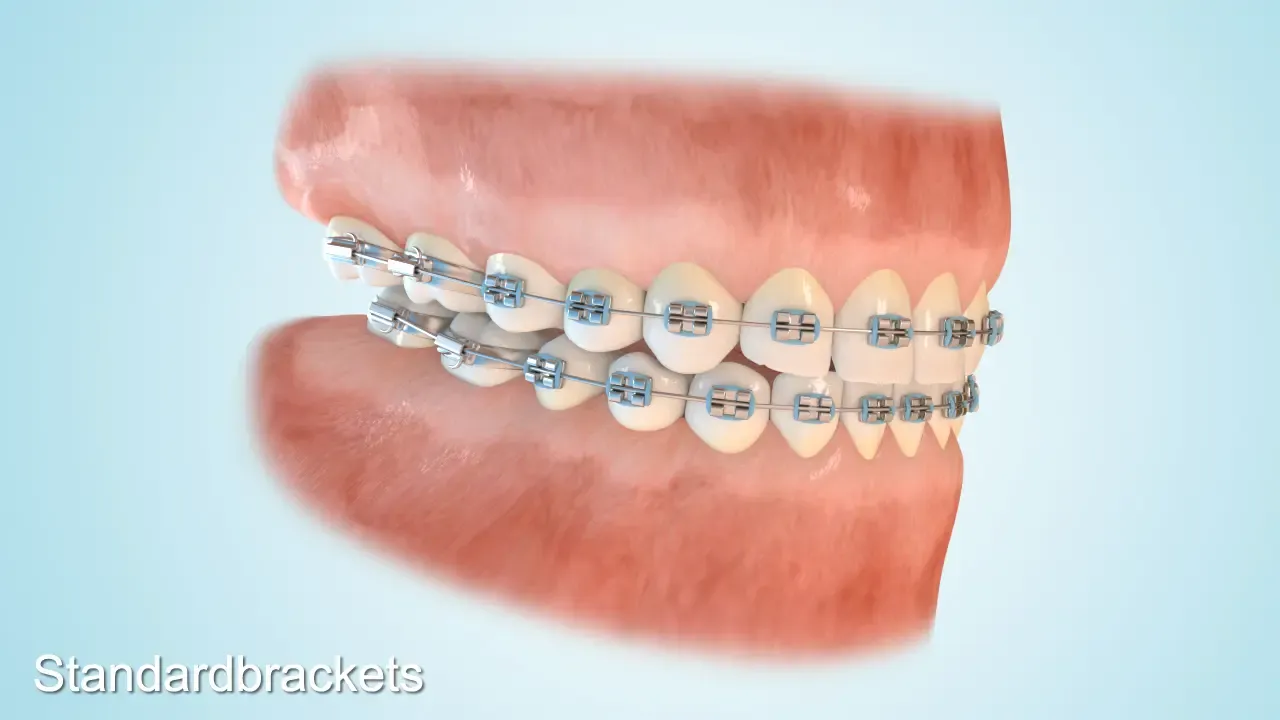
With fixed braces, brackets are attached to the teeth (on the front or back surfaces) and connected with archwires that apply continuous pressure, gently moving the teeth into the desired position.
Metal Brackets
The classic option made of durable stainless steel. Metal brackets are very strong but highly visible. Due to aesthetic considerations, tooth-colored ceramic brackets are a popular alternative.
Ceramic Brackets
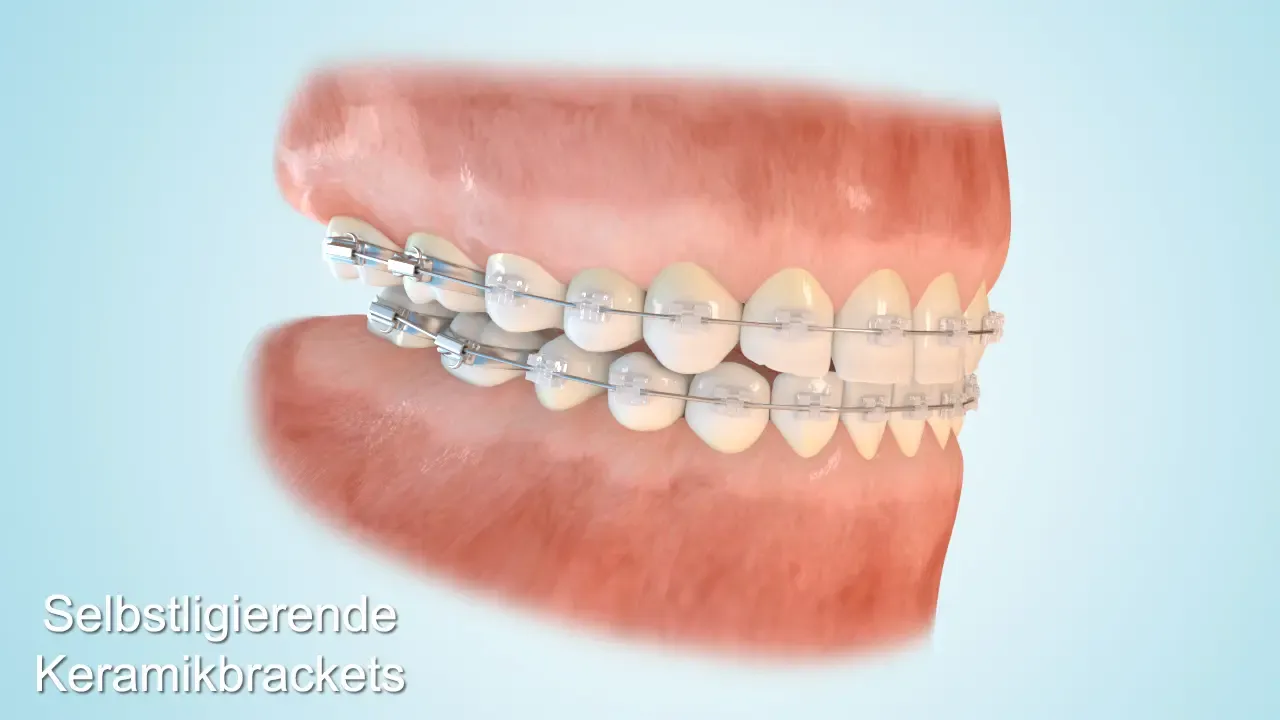
For an aesthetically pleasing alternative, ceramic brackets are ideal. These tooth-colored brackets are less noticeable than their metal counterparts while providing the same effectiveness. They are especially popular with patients who prefer a discreet solution.
Advantages of Ceramic Brackets
-
Discreet Appearance: Thanks to their tooth-colored design, ceramic brackets are significantly less visible than metal brackets, making them aesthetically appealing – perfect for patients seeking a subtle option.
-
Same Effectiveness: Despite their aesthetic benefits, ceramic brackets offer the same efficiency and stability in tooth correction as conventional metal brackets.
-
Comfortable to Wear: Ceramic brackets have a smoother surface, reducing irritation in the mouth and increasing wearing comfort.
-
Stability and Durability: Modern ceramic brackets are strong and durable, making them a long-lasting and reliable option for orthodontic treatment.
- No Discoloration: High-quality ceramic brackets do not tend to discolor, ensuring they remain aesthetically pleasing throughout the treatment.
Lingual Braces (Hidden Braces)
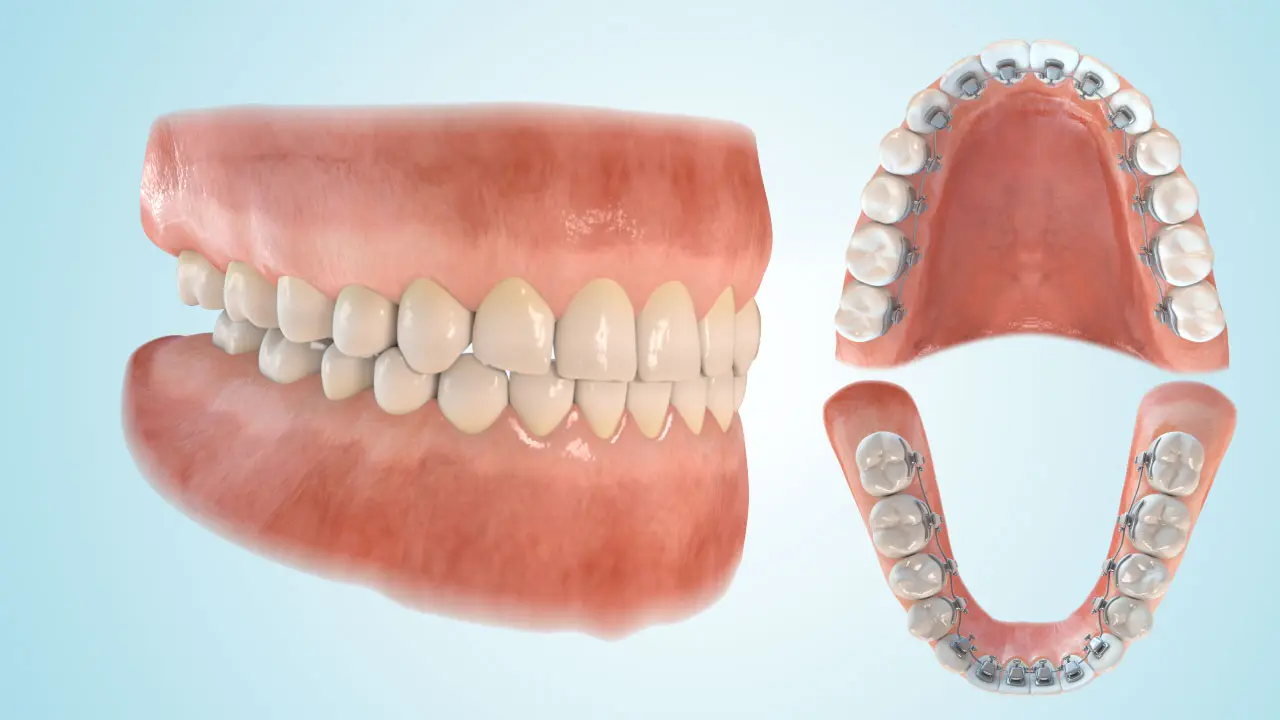
Lingual braces provide an almost invisible solution, as they are attached to the inside of the teeth. This method is especially suitable for patients who prioritize aesthetics. Although they are slightly more expensive and require a longer adjustment period, they offer a discreet way to correct teeth.
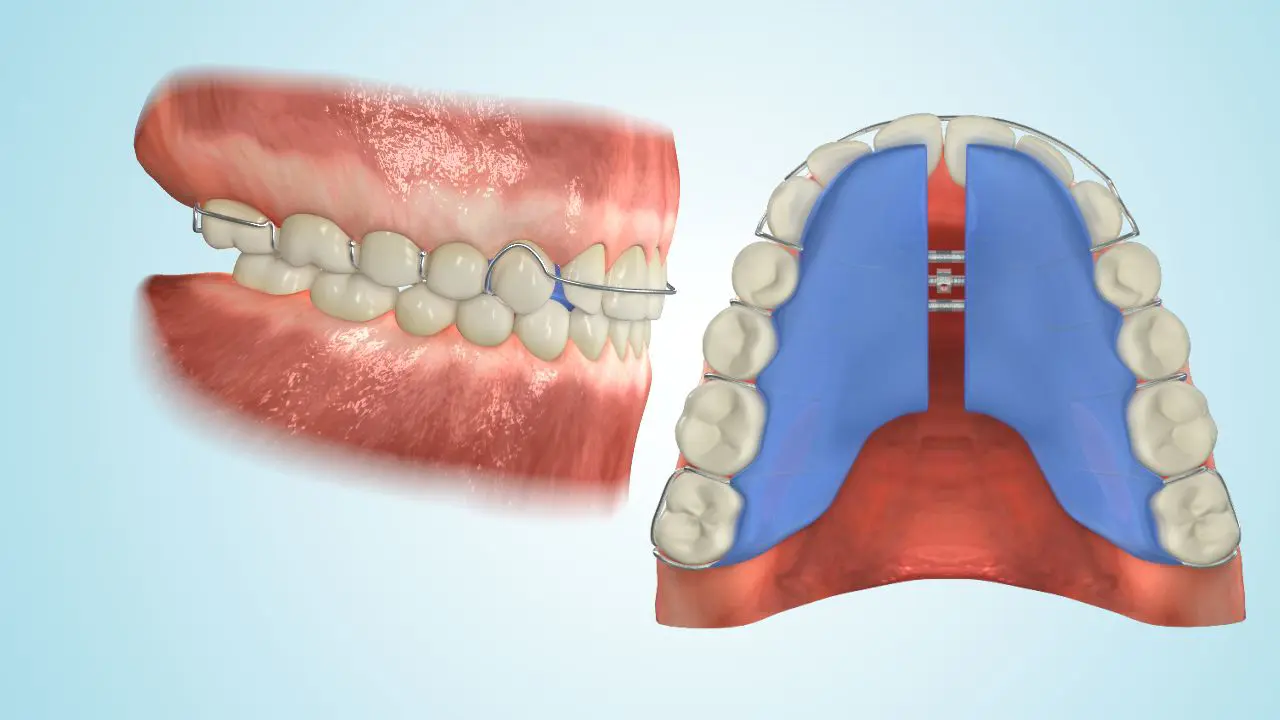
Removable braces
Removable braces are often used for children whose jaws are still growing and whose teeth are in the process of changing. These appliances help guide or control jaw growth and correct minor misalignments. They are especially popular because they can be easily removed, for example, while eating or cleaning. However, removable braces require consistent wear to achieve the desired results. With proper compliance, they can effectively correct jaw misalignments and guide jaw growth in the right direction.
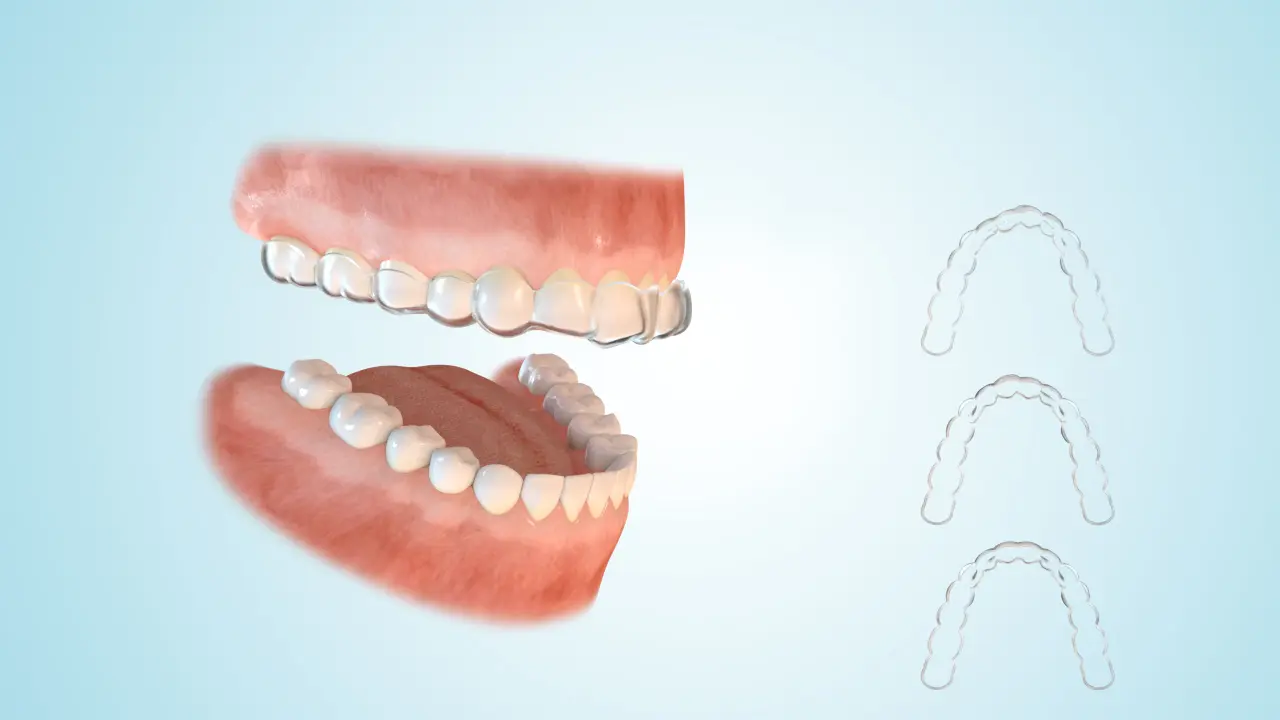
Invisible braces (Aligners)
Aligners are made of transparent plastic trays, custom-made for each patient’s teeth. They are especially popular with teenagers because they are nearly invisible and can be easily removed. Aligners provide a discreet way to straighten teeth, and in many cases, they are as effective as fixed braces. We work with several manufacturers (Invisalign, SureSmile, Angel Aligner) to select the most suitable system for each patient’s needs.
Treatment process
The treatment process for braces for children and adolescents at the Vienna Döbling Dental Clinic is tailored to the needs of young patients and the various developmental stages of teeth and jaws. Each step is designed to correct dental and jaw misalignments early and effectively.
Initial Consultation and Diagnosis
During the first examination, we conduct a thorough analysis of your child’s or adolescent’s teeth and jaw. This includes a clinical examination and the creation of X-rays, such as panoramic, bitewing, and cephalometric images. Additionally, intraoral scans are taken to obtain precise digital impressions of the teeth. These data help us identify potential misalignments and understand jaw growth patterns. Based on this information, we develop a detailed treatment plan specifically tailored to the individual needs of your child.
Treatment Planning and Discussion
After the initial examination and diagnosis, the therapy is discussed in detail. Using modern 3D technology, we simulate the course of treatment and show you and your child how the teeth will move over the coming months. This clear visualization of the expected results helps explain the necessity of the therapy and motivates young patients to actively participate in the treatment process.
Placement of the Braces
Depending on the needs and developmental stage, either a removable or fixed brace (ceramic or metal brackets) is applied. For minor misalignments and when the jaw is still growing, removable appliances are often used to guide jaw growth and make lighter corrections. In more advanced cases, when the permanent teeth have already erupted, fixed braces or aligners are employed.
Regular Check-ups and Adjustments
During treatment, regular check-ups are necessary to monitor progress and make adjustments if needed. These appointments typically occur every 4–8 weeks. It is especially important that children and adolescents adhere to the recommended wearing times and properly maintain their braces. Through close supervision, we ensure that the treatment progresses optimally and the desired results are achieved.
Removal of Braces or Attachments
Once the teeth have reached the desired position, the braces are removed. The treatment duration varies depending on the type and complexity of the misalignment and can range from several months to a few years. For children and adolescents, it is important to remain motivated after the active treatment phase to consistently follow the retention protocol.
Retention
After the active treatment phase, the retention phase begins. This phase is crucial to stabilize the achieved results and prevent relapse. We use either removable retainers, worn overnight, or fixed retainer wires attached to the back of the teeth. Retention helps maintain the teeth in their new position while the jaw continues to develop.
Treatment Duration
The duration of orthodontic treatment varies depending on the individual case and the chosen treatment method. Depending on the type and severity of the misalignment, the treatment usually lasts between 1.5 and 3 years.
Care and Aftercare
During treatment with fixed or removable braces, thorough oral hygiene is essential. Fixed braces require special care, as food particles can easily accumulate around the brackets. Special toothbrushes and interdental brushes help clean all areas thoroughly and reduce the risk of cavities and gum inflammation. Removable braces and aligners must also be cleaned regularly to prevent plaque buildup. After the treatment is completed and during the retention phase, regular check-ups are important to monitor the stability of the teeth and make any necessary adjustments.
Author
Dr. Julia Lachner-Zenker, MSc, MLS
Orthodontist
Vienna Döbling Dental Clinic
27.12.2025
We’re Here for You!

Phone
You can reach us Monday to Friday from 8 AM to 6 PM to schedule your appointment by phone.
01 320 97 97 →
Online Booking
Prefer to book your appointment at your convenience? Use our online booking system — available 24/7.
Book an appointment online →
Would you like to contact us directly? Simply send us an email — we look forward to hearing from you!
office@zwd.at →Frequently Asked Questions (FAQs)
Here you can find all frequently asked questions. If you have any further questions, please feel free to contact us at any time and schedule a consultation. We are available Mon-Fri from 8 am to 6 pm at 01 320 97 97. You can also use our online appointment booking. We look forward to your visit!
An orthodontic examination is recommended from the age of 7, as the first permanent teeth erupt at this age and potential misalignments can be detected early.
Signs may include crooked teeth, an overbite or underbite, jaw misalignment, or difficulties with chewing. An orthodontist can determine whether your child needs braces.
In certain cases, braces can already be applied during the primary (baby) teeth phase to guide jaw growth and prevent future problems.
The treatment duration varies depending on the misalignment and usually ranges from a few months to several years.
Fixed braces consist of brackets and wires that are permanently attached to the teeth, whereas removable braces can be taken out and worn flexibly as needed.
Mild discomfort may occur in the first few days after braces are placed or adjusted, as the teeth begin to move, but most patients quickly get used to it.
Diet should be adjusted to avoid hard, sticky, or sugary foods, as these can damage the braces or make oral hygiene more difficult.
Check-ups usually take place every 4 to 8 weeks to monitor progress and make any necessary adjustments.
For fixed braces, special brushes and interdental brushes are ideal, while removable braces should be cleaned regularly with a cleaning solution, water, and a soft toothbrush.
In Austria, severe dental misalignments (IOTN 4 or 5 and above) are covered by the free braces program, while for milder misalignments, the costs must be borne by the parents.
Sports activities are still possible while wearing braces. However, for contact sports, it is recommended to wear a special mouthguard to protect the teeth and the braces.
Playing musical instruments, especially wind instruments, is possible while wearing braces. However, a short adjustment period may be necessary.
In the first few days after getting braces, there may be slight changes in speech, but these usually normalize quickly.
An appointment with the orthodontist should be scheduled to repair the bracket or wire as soon as possible and to ensure that the treatment progress is not interrupted.
There are several options, including fixed braces with metal or ceramic brackets, removable braces, lingual braces (attached on the inside of the teeth), and transparent aligners.
Braces help correct misalignments and improve oral health by making oral hygiene easier. However, thorough cleaning during treatment is essential.
After the treatment, wearing a retainer is necessary to ensure that the teeth remain permanently in their new position.
For mild to moderate misalignments, transparent aligners are a discreet and effective option for correcting teeth.
Irregular wearing, especially with removable braces, can lead to delays in treatment progress or relapse.
The retention phase can last several months to years and is designed to stabilize the teeth in their new positions, ensuring the treatment results are maintained.

