
Veneers
Veneers offer an elegant way to enhance your smile with harmony and aesthetics. Our experienced dentists and dental technicians work closely together to create custom ceramic veneers that perfectly complement your teeth. Achieve your Hollywood smile with minimal tooth reduction and long-lasting results. Book your consultation today at our dental clinic!

Why veneers are the ideal aesthetic solution
Veneers are an excellent solution to enhance your smile aesthetically and achieve a natural look. Discover how veneers can transform your teeth and why they are the preferred choice for many patients.
What are veneers?
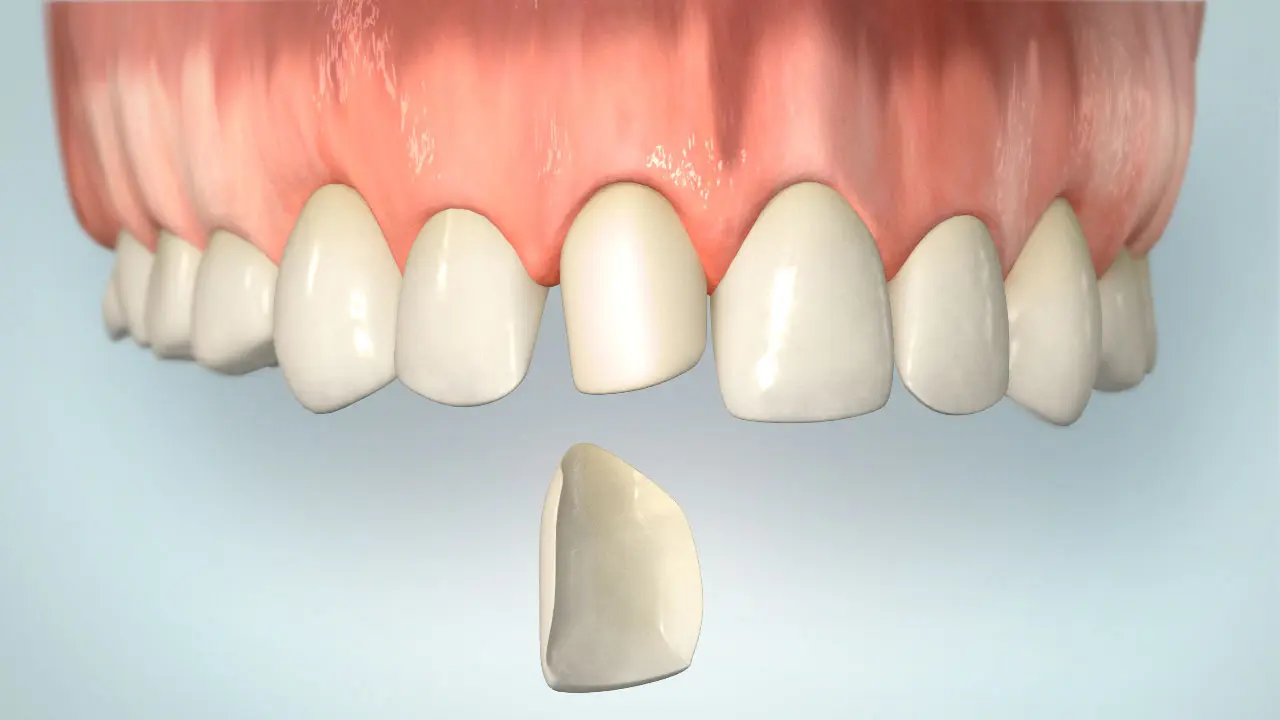
Veneers are thin, translucent shells applied to the front surface of teeth to improve their appearance. They are typically made of ceramic and provide a durable, aesthetic solution for correcting teeth, especially in the front area. The ceramic shells, about 0.5 mm thick, can be precisely shaped and colored to match your natural teeth, creating a harmonious and natural-looking result. A major advantage of veneers is the minimally invasive preparation, preserving most of the tooth structure. The preparation margin is not placed under the gum line, ensuring that the veneers remain visually appealing even in cases of gum recession.
Materials for Veneers
Ceramic is the most common material for veneers, valued for its superior aesthetics and durability. For specific requirements, other options such as lithium disilicate, zirconia, and acrylic are available, depending on individual needs and desired functionality.
01.
Ceramic
We recommend ceramic veneers. Ceramic is not only the most commonly used material for veneers but is also renowned for its natural aesthetics, as ceramic veneers are translucent and closely resemble natural tooth enamel. Ceramic veneers are durable, resistant to discoloration, and provide high stability. They are especially well-suited for aesthetic corrections in the visible front teeth area, as they can be precisely matched in shape and color to your natural teeth.
02.
Lithium disilicate (glass ceramic)
This type of glass ceramic combines high strength with natural aesthetics and is ideal for patients requiring durability.
03.
Zirconium oxide
Zirconium oxide is extremely durable but less translucent, making it more suitable for areas with high bite forces rather than for purely aesthetic veneers.
04.
Acrylate (temporary)
Acrylic is mostly used for temporary veneers. It is cost-effective but not as durable or aesthetically pleasing as ceramic and is prone to discoloration.
Get a Consultation →Advantages of Ceramic Veneers
Ceramic veneers are considered the preferred choice in aesthetic dentistry, and for good reason. They offer a unique combination of aesthetics, functionality, and durability, making them an ideal solution for many patients.
01.
Natural Aesthetics
Ceramic reflects light similarly to natural tooth enamel, giving the veneers a highly natural appearance and allowing them to blend seamlessly with the surrounding teeth.
02.
Durability and Strength
Ceramic veneers are extremely durable and resilient. With proper care, they can last a lifetime while maintaining their shape and stability.
03.
High resistance to discoloration
Ceramic veneers are highly resistant to discoloration from foods and drinks such as coffee, tea, or red wine, maintaining their color over the long term.
04.
Biocompatibility
Ceramic is well tolerated by the body and does not trigger allergic reactions, which is especially important for sensitive gums.
05.
Minimal tooth preparation
Unlike crowns, veneers require only minimal tooth reduction, making the procedure gentler and preserving the natural tooth structure.
06.
Custom-Fit Precision
Ceramic veneers are custom-designed to fit your teeth perfectly and meet your aesthetic goals.
Book your consultation online now →Who is suitable for veneers?
Veneers are ideal for patients with discolored, chipped, or irregularly shaped teeth. They can also effectively correct small gaps or minor misalignments. In cases of chipped front teeth due to accidents or sports activities, ceramic veneers provide an aesthetic and functional solution that seamlessly blends with the natural tooth. They are also perfect for correcting severe discoloration caused by coffee, nicotine, or red wine, as they resist future staining. Veneers allow for a quick, minimally invasive correction of short, small, or disproportionate teeth. Surface defects such as erosion, wear, or damage from accidents can also be effectively restored.
Treatment Process
The veneer treatment is a precise and carefully coordinated process that ensures both aesthetic and functional results. From the initial consultation to the final placement of the veneers, our dentists work closely to create a smile perfectly tailored to your needs. Below, we outline each step of the treatment so you know exactly what to expect and how we ensure that your veneers not only look great but also last for many years.
Initial Consultation and Diagnosis
The first step is a thorough consultation and examination to determine if veneers are the right solution for you. The condition of your teeth is analyzed, potential risks (such as bruxism – teeth grinding) are assessed, and an individual treatment plan is created. The goal is to precisely define both your aesthetic wishes and dental requirements.
Planning and Tooth Preparation
Once veneers are chosen, precise planning begins. A thin layer of enamel (about 0.5 mm) is removed from the front of the teeth to make space for the veneers. A precision impression is then taken to create a plaster model, which serves as the basis for your custom-made veneers. At this stage, the color and shape of the veneers are carefully determined, often in close collaboration with the dental technician to achieve a harmonious overall result.
Fabrication of Veneers
The veneers are individually fabricated in our in-house dental laboratory. Our dental technicians take all aesthetic and functional requirements into account, particularly the exact color and shape. To achieve a natural appearance, they carefully analyze the structure, form, and color of the adjacent teeth.
Try-in and Adjustment
Before permanent placement, a try-in is performed. Different bonding agents are tested for color and translucency to ensure the best aesthetic result. Adjustments can still be made at this stage if necessary. Only when the cosmetic outcome is perfect is the veneer permanently bonded to the tooth.
Placement of Veneers
After a successful try-in and final adjustments, the ceramic veneers are bonded to the prepared teeth using a special adhesive. This process is precise and usually painless. Your dentist will check the fit and aesthetics one last time to ensure the desired result is achieved.

Care and Aftercare for Veneers
After getting ceramic veneers, maintaining good oral hygiene is essential to ensure their longevity. Brush your teeth at least twice daily with fluoride toothpaste and use dental floss regularly to prevent gum inflammation and cavities. Avoid very hard foods, as they can damage the veneers. Regular dental check-ups are important to monitor the condition of your veneers and detect any issues early. If you grind your teeth, a specialized night guard can help protect your veneers.
Author
Dr. Matthias Göstel
Dentist, Medical Director
Dental Clinic Vienna Döbling
23.12.2025
We’re Here for You!

Phone
You can reach us Monday to Friday from 8 AM to 6 PM to schedule your appointment by phone.
01 320 97 97 →
Online Booking
Prefer to book your appointment at your convenience? Use our online booking system — available 24/7.
Book an appointment online →
Would you like to contact us directly? Simply send us an email — we look forward to hearing from you!
office@zwd.at →Frequently Asked Questions (FAQs) about Veneers
Here you’ll find answers to the most frequently asked questions. If you have further questions, you can always contact us or book a consultation. We are available Monday to Friday from 8 AM – 6 PM at 01 320 97 97. You can also use our online booking system. We look forward to welcoming you!
Yes, in most cases the teeth need to be minimally prepared (shaved) to make room for the veneers. This process is very gentle and only removes a small amount of enamel, usually around 0.5 mm.
Yes, shaving the enamel is often necessary to ensure that the veneers fit properly and achieve a natural appearance.
In most cases, veneers feel almost identical to your natural teeth after a short adjustment period. They are specifically designed to integrate seamlessly with your bite.
Ceramic veneers are highly resistant to discoloration. Unlike natural teeth, they do not absorb stains from food or drinks.
Veneers are typically applied to natural teeth. If crowns or bridges are already present, veneers cannot be placed on them. In such cases, the dental restorations would need to be replaced or adjusted.
The treatment starts with a detailed consultation and examination. Next, the teeth are prepared by lightly shaving the enamel. An impression is taken, which is used to fabricate the custom-made veneers in the laboratory. In the following appointment, the veneers are carefully fitted and permanently bonded to the teeth.
Ceramic veneers are very gentle on natural teeth. With minimal preparation, most of the tooth structure is preserved, and the veneer protects the surface from further damage. As long as veneers are correctly applied and maintained, they do not harm the teeth, though in rare cases they may cause pulp irritation.
Ceramic veneers offer numerous benefits: they correct discoloration, chipped, or irregularly shaped teeth and give you a flawless smile. They are durable, resistant to staining, and provide a quick, aesthetic solution without the need for orthodontic treatments.
Veneers, especially ceramic ones, can last up to 20 years—or even a lifetime—when properly cared for and maintained with regular dental check-ups.
The preparation and placement of veneers are generally painless. The tooth is minimally shaved under local anesthesia. After the procedure, there may be a short period of increased sensitivity, which usually subsides quickly.
Although ceramic veneers are securely bonded to the tooth, they can, in rare cases, come loose or detach. Causes may include strong mechanical stress or natural wear of the adhesive. If a veneer comes off, it can usually be reattached without problems.
Veneers are not suitable for everyone. People with severely damaged teeth, insufficient enamel, or severe bruxism (teeth grinding) may be better served with other dental solutions, such as crowns or implants.
Veneers do not require any special care. Regular brushing, flossing, and mouthwash are sufficient to keep them clean and in good condition. Regular dental check-ups and professional cleanings also help protect your veneers.
Veneers are designed as a long-term solution. Since a small amount of enamel is removed when placing veneers, the process is irreversible. This means the tooth will always need to be covered with a veneer or a similar dental restoration.
After getting veneers, there may be a brief adjustment period during which your speech is slightly affected. This occurs because veneers are slightly thicker than natural teeth. Usually, the tongue adapts quickly, and speech returns to normal.
Veneers are an excellent choice for severely discolored teeth that do not respond to other treatments such as whitening. They fully cover the discoloration, giving the teeth a bright, even appearance.
The cost of veneers varies depending on the material used. Ceramic veneers are particularly durable and provide excellent aesthetic quality. At Dental Clinic Vienna Döbling, our experienced dentists will provide comprehensive advice to find the best solution for your individual needs. Exact costs depend on the chosen material and the complexity of the treatment.
Veneers protect the tooth from further damage by acting as a protective layer over the enamel. They provide an extra barrier, especially in cases of cracks, chips, or enamel erosion.
Veneers are designed to blend seamlessly with your natural teeth. Thanks to their custom shape and color, they appear very discreet and are virtually indistinguishable from your real teeth.
The treatment usually takes place over two to three appointments. The first appointment covers consultation, the second involves preparing (shaving) the teeth, and in the third, the custom-made veneers are placed.
Veneers can be replaced if necessary. If they are damaged or need to be changed, the dentist can remove the existing veneers and fit new ones.
Veneers are ideal for severely discolored teeth that cannot be lightened with bleaching. They cover the discolorations, providing a bright and even smile.
Yes, after getting veneers, you can generally eat all types of food. However, it is recommended to be cautious with very hard foods to minimize the risk of damage.
Care for your veneers like your natural teeth by brushing and flossing regularly. Regular dental check-ups and professional cleanings help keep your veneers in excellent condition.

