
Braces for adults
An invisible path to straight teeth – modern adult braces offer aesthetic and comfortable solutions to discreetly correct misaligned teeth.

The path to a perfect smile in adulthood
More and more adults are choosing orthodontic treatment to improve both the aesthetics and functionality of their teeth. Straight teeth not only create a confident smile but also support better oral hygiene. The demand for discreet, nearly invisible solutions is increasing, as aesthetic expectations in both professional and personal settings grow. Modern orthodontic options such as ceramic brackets, lingual braces, or clear aligners offer numerous subtle ways to correct misaligned teeth without disrupting daily life. Thanks to advanced technologies like 3D printing and custom-fit aligners, achieving your dream smile is possible at any age.
Why choose braces as an adult?

Braces offer numerous benefits for adults. Beyond improving the aesthetics of your smile, they positively impact overall dental health. Straight teeth make oral hygiene easier and reduce the risk of gum disease, cavities, and tooth loss. Orthodontic treatment can also correct functional issues and bite problems that may cause jaw pain, headaches, or difficulties chewing and speaking. Additionally, braces help optimize your bite, ensuring that teeth align properly and jaw misalignments are corrected. This supports the long-term health of both teeth and jaws.
Types of Braces for Adults
Modern orthodontics today offers a variety of solutions to correct dental misalignments in adults. Whether visible or nearly invisible options, the choice of the right braces depends on individual preferences and the extent of the dental correction. In our dental clinic, we place particular emphasis on aesthetic and comfortable treatment that integrates seamlessly into your daily life. From ceramic brackets and lingual braces to clear aligners, there is a suitable solution for every patient.
External braces (brackets)
External braces effectively correct misaligned teeth. We recommend ceramic brackets, as they are more aesthetic than metal brackets and can be color-matched to the teeth. They provide a discreet solution, especially for adults, and allow precise correction without compromising appearance. Additionally, they are stain-resistant, biocompatible, and well tolerated.
Details on fixed braces (brackets) →
Lingual braces (inside braces)
Lingual braces have the brackets attached to the inside of your teeth, making them invisible from the outside. This option provides a discreet solution, ideal for people who want their teeth correction to remain inconspicuous in professional or private settings.

Aligners (invisible dental trays)
Aligners are transparent, removable dental trays designed for discreet correction of misaligned teeth. Custom-made, they gradually move the teeth into the desired position. Being removable, they allow for normal eating and brushing. Every 1–2 weeks, a new tray is used, applying gentle pressure until the optimal tooth alignment is achieved.
Details on invisible braces (aligners) →Your orthodontist at the Vienna Döbling Dental Clinic
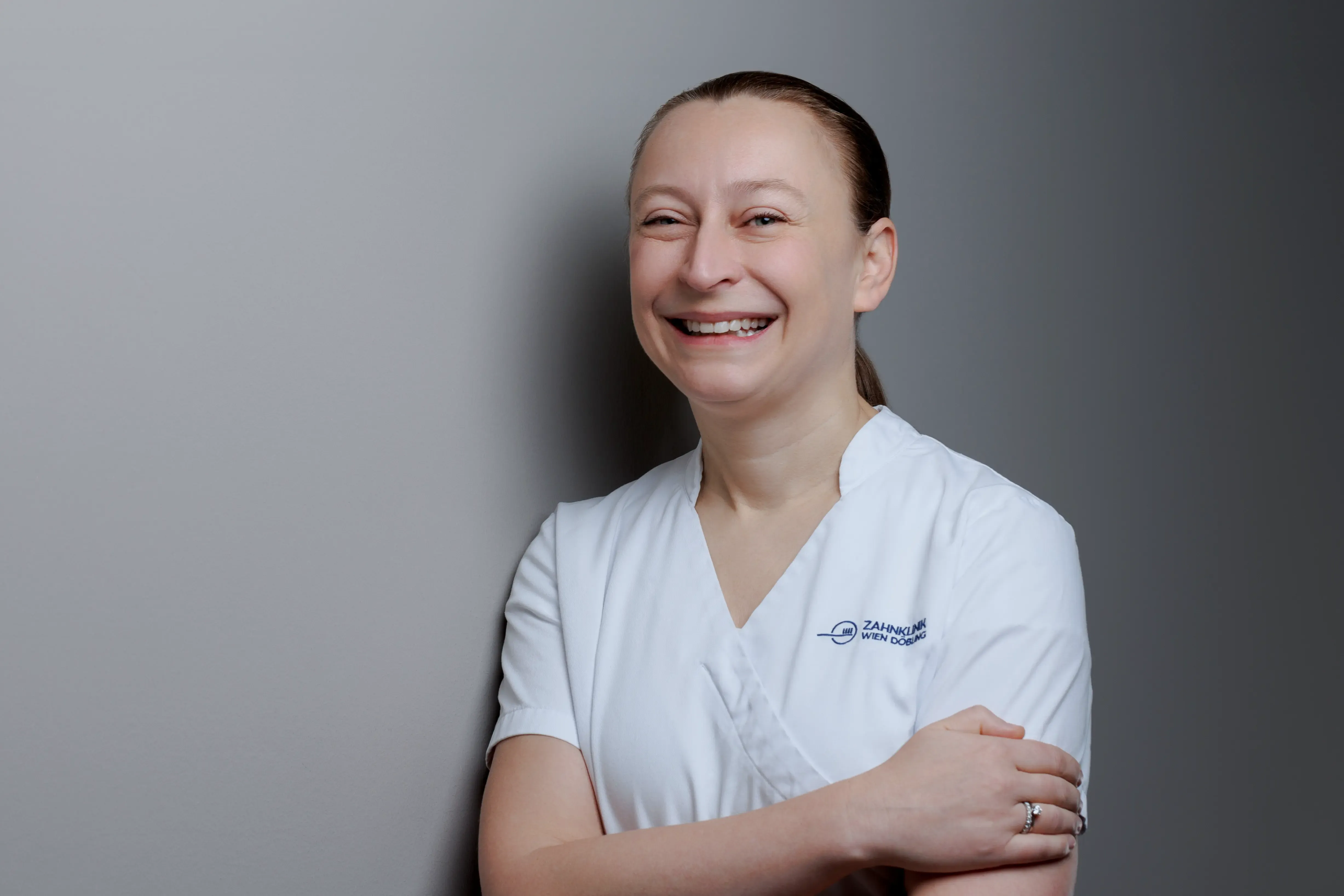
At the Vienna Döbling Dental Clinic, you will be cared for by a highly qualified team dedicated to your dental and jaw health. A leading expert in orthodontics is Dr. Julia Lachner-Zenker, MSc, MLS. With her extensive experience and ongoing training in orthodontics, she is the ideal contact for patients of all ages – whether children, adolescents, or adults.
Our orthodontic services offer comprehensive treatment options for people of all ages, from children to teenagers and adults. Treatment methods include fixed and removable braces, lingual braces attached to the inner teeth, and invisible aligners from various manufacturers. In some cases, orthodontic surgery may be necessary to achieve optimal results. Dr. Lachner-Zenker combines her professional expertise with a focus on compassionate, individualized patient care. Her goal is to find the best possible solution for each patient – whether with traditional fixed braces, invisible aligners, or other modern treatment options. She takes the time to provide thorough consultations and develop a personalized treatment plan together with her patients.
Thanks to close collaboration with the in-house dental laboratory at Vienna Döbling Dental Clinic, all appliances for your treatment can be produced quickly and accurately. This ensures optimized treatment times and the highest precision in fitting braces. With such a team and state-of-the-art technology, you are in excellent hands at Vienna Döbling Dental Clinic for your orthodontic care.
Treatment Process
Treatment process for adult braces at Dental Clinic Vienna Döbling is carried out in several stages, tailored to your individual needs and the chosen method.
1. Initial Consultation and Diagnosis
During the first consultation, we discuss your goals and expectations. A comprehensive clinical examination is performed, including diagnostic imaging such as panoramic and bitewing X-rays, as well as a cephalometric X-ray. An intraoral scan captures precise digital impressions of your teeth, complemented by profile photos and dental photographs. If necessary, a 3D CBCT scan of your teeth and jaws is taken. This thorough diagnosis forms the basis for selecting the appropriate braces and creating a customized treatment plan.
2. Treatment Planning & Discussion
Based on the examination results, an individualized treatment plan is developed. Using advanced 3D technology, we simulate the movement of your teeth over the course of the treatment, giving you a clear visualization of the expected results.
3. Placement of Braces or Delivery of Aligner Trays
Depending on the chosen method, fixed braces (ceramic or lingual brackets) or aligner trays are applied to your teeth. For aligners, new trays are provided periodically to gradually guide your teeth into the correct position.
4. Regular Check-Ups and Adjustments
During the treatment, appointments are scheduled every 6–8 weeks to monitor progress. Regular supervision ensures optimal tooth movement and the best possible outcome.
5. Removal of Braces or Attachments
Once your teeth have reached the desired position, the brackets or aligners are removed. Treatment duration varies depending on the method and severity of misalignment, typically ranging from several months up to two years.
6. Retention
After successful treatment, the retention phase begins to maintain your teeth in their new position. This may involve removable retainers or fixed wires bonded to the teeth to prevent relapse.
Care and Aftercare
During treatment, maintaining good oral hygiene is essential. Brushing, flossing, and using mouthwash help minimize the risk of cavities and gum disease. With fixed braces, thorough cleaning is particularly important to remove food particles and plaque. For aligners, we recommend cleaning the trays daily with a cleaning solution and clear water, and reinserting them after brushing. After the treatment is completed, retention is crucial to ensure that your teeth remain in their new positions. Retainers help maintain your new smile permanently.
Author
Dr. Julia Lachner-Zenker, MSc, MLS
Orthodontist
Vienna Döbling Dental Clinic
19.12.2025
We’re Here for You!

Phone
You can reach us Monday to Friday from 8 AM to 6 PM to schedule your appointment by phone.
01 320 97 97 →
Online Booking
Prefer to book your appointment at your convenience? Use our online booking system — available 24/7.
Book an appointment online →
Would you like to contact us directly? Simply send us an email — we look forward to hearing from you!
office@zwd.at →Frequently Asked Questions (FAQs) about Adult Braces
Here you’ll find answers to the most frequently asked questions. If you have any further questions, you are welcome to contact us at any time or book a consultation. We are available Monday to Friday from 8 AM to 6 PM at 01 320 97 97. You can also use our online booking system. We look forward to welcoming you!
Yes, braces are effective for adults over 20 years old. Orthodontic corrections are possible at any age, provided that the teeth and gums are healthy.
Certain orthodontic treatments can help move the lower jaw forward to improve bite alignment. However, the effectiveness depends on the severity of the misalignment and the patient’s age. In some cases, particularly with significant discrepancies, jaw surgery may be the most appropriate option.
Yes, braces can correct an overbite (deep bite) in adulthood. The duration of treatment may vary depending on the severity of the misalignment.
In most cases, health insurance covers orthodontic treatment for adults only if there are serious medical issues. Private health insurance may reimburse costs depending on the policy.
The treatment duration typically ranges from 12 to 24 months, but it may vary depending on the complexity of the dental misalignment and the chosen treatment method.
It is important to maintain thorough oral hygiene, attend regular check-ups, and avoid certain hard or sticky foods that could damage the braces.
Yes, invisible braces such as aligners or lingual braces (placed on the inner side of the teeth) offer a discreet option for teeth correction.
Braces should be cleaned after every meal to remove food particles and help prevent cavities.
Yes, you can continue playing sports. However, it is recommended to wear a special mouthguard to prevent injuries.
There are fixed braces with metal or ceramic brackets, lingual braces (placed on the inside of the teeth), and removable, transparent aligners.
The treatment may cause slight pain or pressure during the first few days after adjustments, but this usually subsides quickly.
Certain foods, such as hard or sticky items, should be avoided during treatment to prevent damage to the braces.
After the treatment, the retention phase begins. Retainers must be worn to stabilize and maintain the results of the orthodontic treatment.
Yes, correcting dental misalignments can help alleviate jaw joint (TMJ) problems and reduce associated discomfort, such as pain or muscle tension.
Yes, braces can be just as effective in adults. The main difference is often the treatment duration, as teeth tend to move slightly more slowly in adults.
For adults, aesthetic options such as ceramic brackets, lingual braces (placed on the inside of the teeth), or invisible aligners (e.g., Invisalign) are particularly popular, as they are both discreet and effective.
The treatment duration varies depending on the severity of the dental misalignment and the chosen method. Generally, treatment lasts between 12 and 24 months.
Yes, oral hygiene requires extra care with fixed braces, as food particles can accumulate around the brackets. It is recommended to use dental floss, special brushes, and mouth rinses.
At the beginning of the treatment and after adjustments, you may experience slight pressure or discomfort, which usually subsides within a few days.
Indirectly, yes. Braces can help reduce the risk of cavities and gum disease by correcting misalignments, making it easier to clean the teeth properly.
Yes, for minor misalignments, a partial treatment can be performed that focuses only on specific teeth.
Yes, by correcting misalignments, braces can help alleviate jaw joint problems and improve bite function.
No, age does not affect the choice of braces in adults, as long as the teeth and gums are healthy.
Check-up appointments are usually scheduled every four to eight weeks to monitor progress and make any necessary adjustments.
Yes, you can, but you should avoid hard, sticky, or very chewy foods, as they can damage the brackets.
Without retention measures (e.g., retainers), teeth can shift back to their original positions. Therefore, post-treatment retention is crucial for long-term success.
In the first few days, slight speech difficulties may occur, but these usually resolve quickly once the mouth gets used to the braces.
Yes, aligner trays such as Invisalign provide a flexible and nearly invisible alternative to fixed braces, especially for mild to moderate misalignments.
The cost depends on the type of braces and the duration of treatment. An exact estimate is provided after an individual consultation and diagnosis.

