
Apicoectomy: Precise Tooth Preservation
Apicoectomy is a specialized procedure that becomes necessary when root canal treatment alone is not sufficient to eliminate inflammation at the tooth root. At Dental Clinic Vienna Döbling, we use state-of-the-art technology to perform precise and successful treatments. Learn more about the procedures, indications, and treatment process to preserve your teeth in the long term.

What is an Apicoectomy?
An apicoectomy is a surgical dental procedure performed to treat inflammation or infection in the area of the root tip of a tooth. This treatment is usually considered when conventional root canal treatment (endodontic therapy) is not sufficient or has not been successful in completely eliminating the infection. Additional reasons may include new infections, incomplete cleaning of the root canals, or fractured instruments within the canal.

Reasons and Indications
01.
Inflammation or Infection After Root Canal Treatment
Despite successful root canal treatment, inflammation or infection at the root tip may persist in some cases. This can be caused by remaining bacteria, anatomically difficult-to-access canals, or reinfection. An apicoectomy removes the infected root tip and ensures that the inflammation is treated effectively.
02.
Cysts or Granulomas at the Root Tip
Chronic inflammation can lead to the formation of cysts or granulomas at the tooth root. These tissue changes often cause pain and swelling and can damage the surrounding bone. An apicoectomy removes these growths, promotes healing, and helps preserve the tooth.
03.
Inaccessible or Severely Calcified Root Canals
In some cases, the root canals of a tooth are difficult to access or severely calcified, making complete cleaning and instrumentation during root canal treatment challenging. In such situations, an apicoectomy can help by accessing the affected area from the outside and removing the inflamed root tip.
04.
Root Fractures or Damage to the Tooth Root
If the tooth root is damaged by a fracture, persistent inflammation may occur that cannot be resolved with conventional root canal treatment. In such cases, an apicoectomy is performed to remove the damaged root tip and stabilize the tooth.
Get Professional Advice →Benefits of Apicoectomy

Tooth Preservation
Apicoectomy makes it possible to preserve the natural tooth even in cases of advanced inflammation.

Effective Pain Relief
By removing the inflamed tissue, pain and discomfort are effectively eliminated.

Minimally Invasive
Thanks to modern microsurgical techniques, the procedure is minimally invasive, which accelerates the healing process and minimizes tissue trauma.
Book Your Consultation Online →Specialized Technologies and Techniques
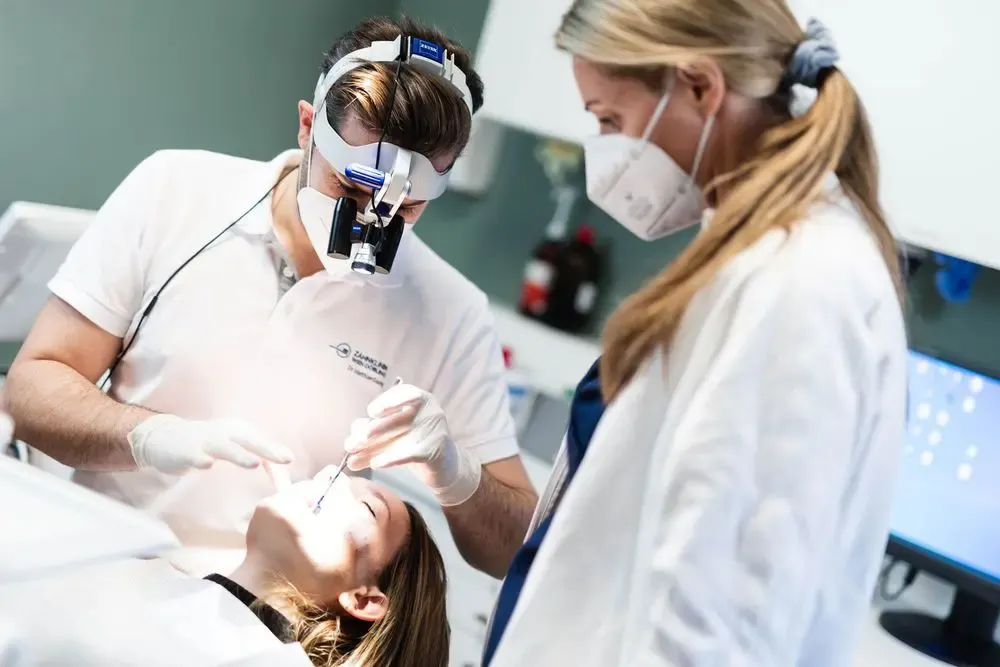
Dental Loupes
The use of dental loupes allows us to significantly magnify the surgical field. This enables extremely precise work, as even the smallest structures such as fine root canals or microcracks become visible, which would not be detectable with the naked eye. The enhanced magnification increases procedural accuracy and minimizes the risk of damaging healthy tissue, thereby improving healing outcomes.
Ultrasonic Instruments
Ultrasonic instruments are frequently used to gently and precisely remove the root tip and surrounding inflamed tissue. The advantage of this technology lies in minimal tissue trauma and the high efficiency with which infected material can be removed. This contributes to faster healing and reduces postoperative discomfort.
Cone Beam Computed Tomography (CBCT)
Prior to the procedure, a CBCT scan can be performed to obtain a three-dimensional view of the affected tooth and surrounding structures. This allows for precise planning and execution of the apicoectomy, as the tooth’s anatomy is visualized in great detail.
By utilizing all of these advanced technologies and techniques, apicoectomy can be performed with greater precision and safety, leading to improved treatment outcomes and a faster recovery for patients.
Treatment Procedure
Diagnosis and Planning
The procedure begins with a thorough examination of the affected tooth. Using X-rays or three-dimensional imaging such as CBCT, the exact location of the inflammation at the root tip is determined. This detailed planning is essential to perform the procedure precisely and safely.
Anesthesia
Before treatment, the affected area is numbed with local anesthesia to ensure a pain-free procedure. In some cases, sedation or general anesthesia may also be considered to provide maximum comfort.
The Procedure
The treating dentist carefully opens the gum tissue above the affected root tip to access the inflamed area. The tip of the tooth root and the inflamed tissue are removed. The root canal is then cleaned, filled, and sealed to prevent future infections. In some cases, bone grafting may be performed to repair defects in the jawbone.
Closure and Healing
After the procedure, the gum tissue is carefully sutured. Healing usually takes only a few days. Mild swelling and discomfort are normal and can be effectively managed with pain medication. Regular follow-up appointments ensure that the tooth remains stable and heals properly.
Aftercare and Healing Process
After an apicoectomy, careful aftercare is essential for a successful healing process. Immediately after the procedure, it is important to keep the treated area especially clean and to avoid unnecessary strain in order to support healing and minimize the risk of infection. Thorough oral hygiene is particularly important during this period. The healing phase usually lasts several weeks, during which mild pain and swelling may occur. These symptoms can typically be well controlled with the prescribed medication. You will receive detailed aftercare instructions to support the healing process as effectively as possible. Regular follow-up appointments are essential to monitor healing progress and ensure that no complications arise. During these check-ups, the condition of the tooth and the surrounding tissue is carefully evaluated to ensure complete recovery.
Author
Dr. Matthias Göstel
Dentist, Medical Director
Dental Clinic Vienna Döbling
22.12.2025
We are here for you!

Phone
You are welcome to call us Monday to Friday from 8:00 a.m. to 6:00 p.m. to schedule an appointment by phone.
01 320 97 97 →
Online Booking
You can also conveniently book your appointment online — anytime, day or night.
Book Appointment Online →
Frequently Asked Questions (FAQs) About Apicoectomy
Here you will find answers to the most frequently asked questions. If you have any further questions, please feel free to contact us at any time and book a consultation. We are available Monday to Friday from 8:00 am to 6:00 pm at +43 1 320 97 97. You are also welcome to use our online appointment booking. We look forward to welcoming you to our clinic.
Apicoectomy is a specialized surgical procedure performed at Dental Clinic Vienna Döbling. During the procedure, the inflamed or infected tip of the tooth root is removed to prevent further spread of infection and to preserve the tooth. Our experienced team relies on state-of-the-art technology and the highest level of precision to ensure the best possible treatment outcome.
An apicoectomy may be necessary when conventional root canal treatment is not sufficient to eliminate an infection or inflammation at the root tip. If you continue to experience symptoms despite previous root canal treatment, you can rely on the expertise of Dental Clinic Vienna Döbling. We will examine your case thoroughly and, together with you, determine the most appropriate treatment option.
At Dental Clinic Vienna Döbling, we place great importance on individualized and compassionate care. The procedure begins with a comprehensive examination and consultation, during which we explain all steps of the treatment in detail. Under local anesthesia, the gum tissue is gently opened to expose the root tip, and the inflamed area is carefully removed surgically. The root is then retrogradely filled, and the tissue is meticulously sutured. Our goal is to provide you with a pain-free and максимально comfortable treatment experience.
After an apicoectomy at Dental Clinic Vienna Döbling, you can expect a fast and uncomplicated healing process. Mild swelling and discomfort may occur during the first few days after the procedure but usually subside quickly. Thanks to our modern treatment methods, recovery is generally brief, allowing you to return to your daily routine soon. Our team is available to support and advise you throughout the entire healing phase.
As with any surgical procedure, apicoectomy involves certain risks. At Dental Clinic Vienna Döbling, we minimize these risks through the use of state-of-the-art technology and many years of clinical experience. Rare complications may include infection, swelling, or nerve irritation. We provide detailed information about all potential risks and are always available to answer any questions you may have.
The cost of an apicoectomy varies depending on the complexity of the individual case. At Dental Clinic Vienna Döbling, we place great importance on transparency and provide you with a detailed written treatment and cost plan in advance. We use only high-quality materials and modern technology to ensure the best possible care. During a personal consultation, we will also clarify whether and to what extent your health insurance may cover the costs.
Many health insurance providers cover the cost of an apicoectomy at least partially, especially when the procedure is medically necessary. At Dental Clinic Vienna Döbling, we are happy to assist you in clarifying reimbursement with your insurance provider and can also submit the invoice on your behalf if required. Our team is always available to answer your questions and help keep the administrative process as simple as possible.
If an apicoectomy is not the optimal solution for your individual situation, we also offer alternative treatment options at Dental Clinic Vienna Döbling. These may include tooth extraction followed by replacement with a dental implant. We will discuss all possible alternatives with you and work together to find the best solution for your long-term oral health.
Before the procedure, we will provide you with comprehensive consultation at Dental Clinic Vienna Döbling and discuss all necessary preparations in detail. It is important that you inform us about any existing medical conditions and medications you are taking. If you have any specific concerns or questions, our team will be happy to assist you. On the day of the procedure, we ensure that you feel well prepared and fully supported throughout your visit.
After an apicoectomy at our clinic, it is important to actively support the healing process. We recommend eating soft foods during the first few days and maintaining particularly careful oral hygiene. Hot foods and beverages as well as strenuous physical activity should be avoided. During follow-up appointments, we regularly monitor the healing progress and are always available to answer any further questions you may have.
Thanks to modern anesthesia techniques, an apicoectomy is virtually pain-free. During the procedure, you may only feel slight pressure but no pain. After the treatment, mild discomfort may occur, which can usually be well managed with standard pain medication. Our team ensures that you feel comfortable and well cared for throughout the entire treatment process.
At Dental Clinic Vienna Döbling, an apicoectomy usually takes between 30 and 60 minutes. The exact duration depends on the complexity of the individual case. As we place great importance on efficient and gentle treatment, we keep the procedure time as short as possible without compromising quality. Before the procedure, we will inform you in detail about the treatment process and the expected duration.
In rare cases, a repeat apicoectomy may be necessary if the initial procedure did not achieve the desired outcome. At Dental Clinic Vienna Döbling, we carefully evaluate whether a second treatment is advisable and assess the likelihood of success. Together with you, we develop an individualized treatment plan tailored to your specific needs.
After an apicoectomy at our clinic, careful aftercare is essential for treatment success. We recommend using a soft toothbrush and rinsing with an antibacterial solution to help prevent infection. Our team will provide you with detailed instructions on how to properly care for the treated area. If you have any questions, we are always happy to assist you.

